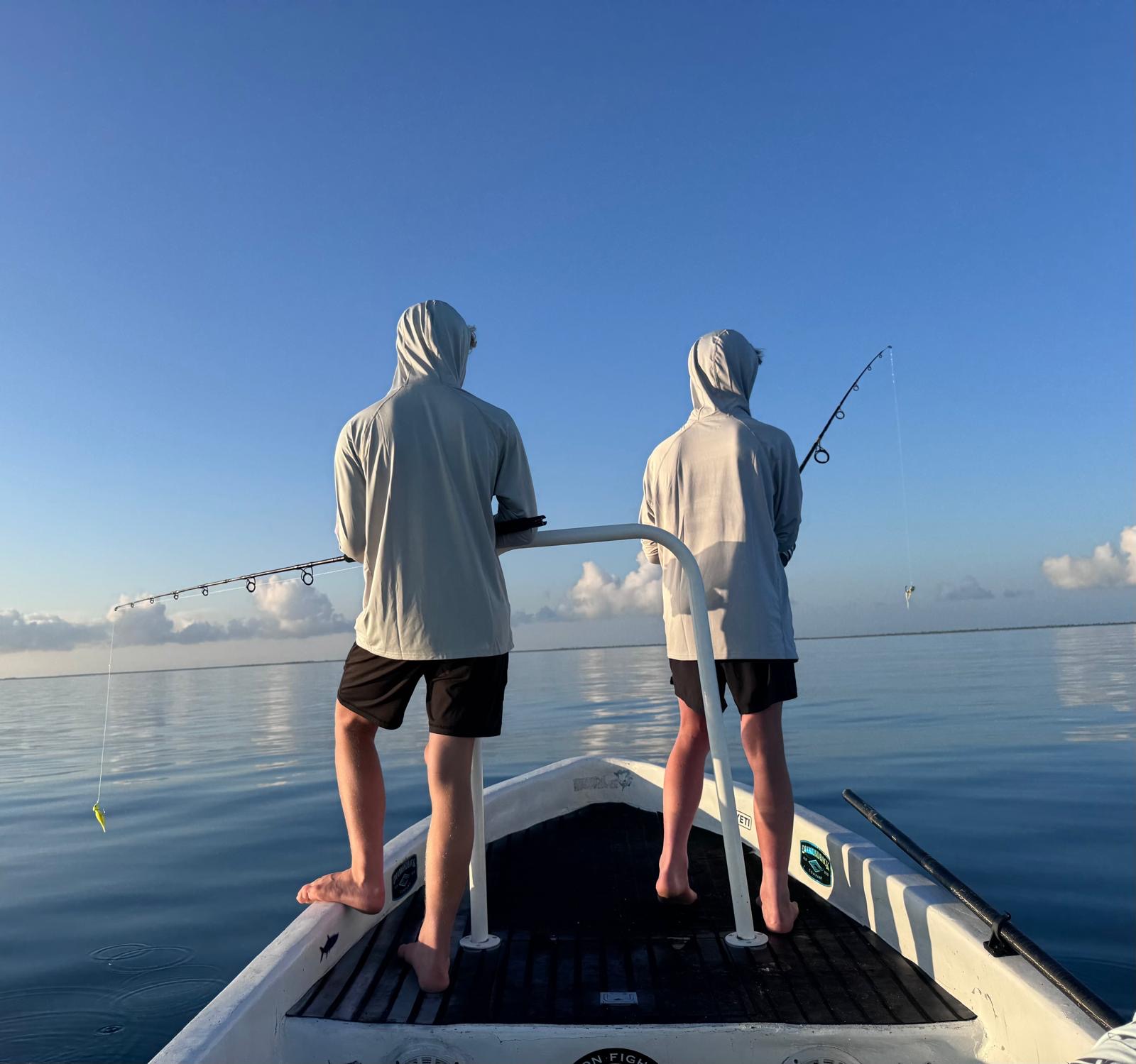
Walk · Wade · Stalk
Mangrove Fly Fishing
The Rawest Way to Fish Holbox
Experience the ultimate mangrove fly fishing adventure in Isla Holbox, Mexico. Our walk and wade trips take you into pristine mangrove channels and shallow flats where you'll stalk baby tarpon, snook, and other saltwater species on foot.
Unlike traditional boat fishing, walk and wade fly fishing offers an intimate connection with the environment. You'll quietly wade through crystal-clear water, spotting fish in the mangroves and making precise casts to feeding tarpon just feet away. This style of fishing is perfect for anglers who want a more immersive, adventurous experience.
Holbox's extensive mangrove systems provide ideal habitat for baby tarpon year-round. The shallow, protected waters create nursery areas where tarpon congregate to feed on small baitfish and crustaceans. Our expert Holbox fishing guides know exactly where to find these fish and how to approach them without spooking them.
What Makes Mangrove Fishing Special
Pristine Ecosystem
Holbox's mangroves are protected and thriving, creating a unique ecosystem where saltwater and freshwater mix. This environment supports incredible biodiversity and provides perfect conditions for sight fishing.
Multiple Species
While tarpon are the main target, you'll also encounter snook, barracuda, jacks, and other predators cruising the mangrove edges hunting for food.
Guided Exploration
Our local guides navigate the complex mangrove channels safely, finding the best fishing spots while teaching you about the ecosystem and its inhabitants.
Authentic Experience
Wading through mangroves with a fly rod is one of the most authentic and rewarding ways to experience saltwater fly fishing in Mexico.
What to Expect on a Mangrove Walk & Wade Trip
Shallow Water Sight Fishing
You'll wade through water typically 1-3 feet deep, carefully watching for fish movement. Polarized sunglasses are essential for spotting tarpon rolling, tailing, or cruising beneath the surface.
Stealth & Strategy
Successful mangrove fishing requires patience and stealth. You'll learn to move quietly, read fish behavior, and make accurate casts to feeding zones without alarming your target.
Perfect for Photographers
The mangrove environment provides stunning backdrops for photography. The combination of clear water, lush vegetation, and incredible wildlife makes for unforgettable images.
Moderate Physical Activity
While not extremely strenuous, wading does require moderate fitness. You'll be walking on sandy or muddy bottoms, sometimes against current, for several hours. Proper wading boots are essential.
Target Species in the Mangroves
Baby Tarpon (10-40 lbs)
The primary target species. Baby tarpon love the shelter and food sources in the mangroves. They're incredibly acrobatic and provide amazing fights on 8-9 weight fly rods.
Snook (5-15 lbs)
Common residents of mangrove edges. Snook are aggressive predators that readily take flies and make powerful runs into the mangrove roots.
Jack Crevalle
Often found cruising the channels. Jacks are incredibly strong and will test your tackle with blistering runs.
Barracuda
Lightning-fast predators that patrol the mangrove edges. Great for adding variety to your day when tarpon fishing slows.
Essential Gear for Mangrove Wading
Wading Boots
Sturdy wading boots with good ankle support are essential. The bottom can be sandy, muddy, or have sharp shells. Flats boots or wading shoes with hard soles work best.
Sun Protection
Long-sleeve sun shirt (UPF rated), wide-brimmed hat, buff or face covering, and quality reef-safe sunscreen. You'll be exposed to intense tropical sun all day.
Polarized Sunglasses
Absolutely critical for sight fishing. Quality polarized glasses allow you to see beneath the surface and spot fish you'd otherwise miss.
Quick-Dry Clothing
Lightweight, quick-dry pants or shorts. You'll be wet most of the day, so avoid cotton. Synthetic or merino materials work best.
Waterproof Pack
A small waterproof bag or pack for storing phone, camera, extra flies, leader material, and snacks during the wade.
Fly Rod & Reel
8-9 weight fast action rod, quality saltwater reel with strong drag, floating tropical fly line, and 200+ yards of backing.
Best Times for Mangrove Fishing
Tide Matters: The best fishing often occurs during incoming or outgoing tides when fish are actively feeding. Our guides time trips to coincide with optimal tidal movements.
Early Morning Magic: The hours just after sunrise provide calm conditions, cooler temperatures, and active fish. Early trips are highly productive.
Seasonal Patterns: While tarpon are present year-round, May through September offers peak action in the mangroves with the highest concentrations of baby tarpon.
Weather Windows: Calm, sunny days provide the best visibility for sight fishing. Our guides monitor conditions and choose the optimal fishing locations based on weather.
Frequently Asked Questions
Is wade fishing difficult?
It requires moderate fitness but is accessible to most anglers. You'll be moving slowly and carefully, not covering huge distances. Proper footwear makes a big difference.
Are there safety concerns?
Our guides know the waters intimately and keep you safe. We avoid deep channels and strong currents. While rays and small sharks are occasionally present, encounters are rare and typically harmless.
How does it compare to boat fishing?
Wade fishing offers a more intimate experience and access to very shallow water that boats can't reach. However, boats allow covering more water and reaching distant locations. We offer both options.
What if I've never fly fished before?
While some casting ability helps, our guides provide instruction and coaching throughout the day. Many first-time fly anglers have successful mangrove trips with our guidance.